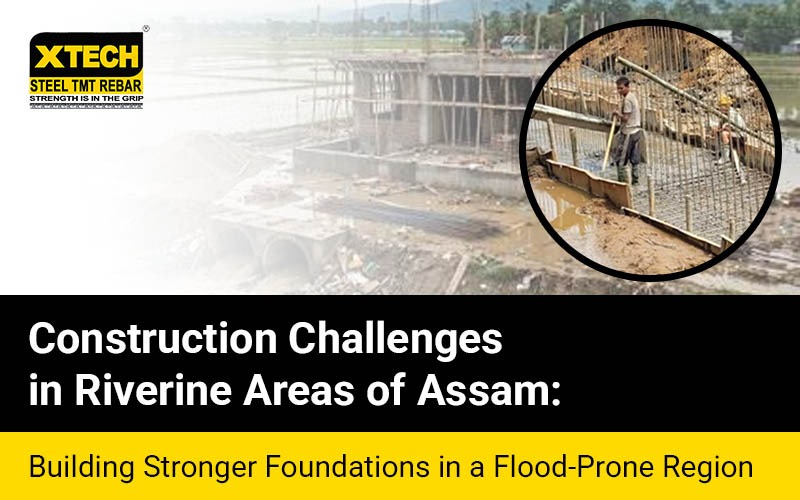
Construction Challenges in Riverine Areas of Assam: Building Stronger Foundations in a Flood-Prone Region
Construction in Assam’s riverine areas comes with a unique set of challenges. Seasonal flooding, riverbank erosion, waterlogged soil and changing ground conditions can make building and infrastructure projects more complex than those in many other regions.
For builders, engineers and homeowners, understanding these conditions is essential before construction begins. The right foundation design, suitable construction materials and proper site planning all play an important role in creating structures that can withstand local environmental conditions.
In this blog, we explore the major construction challenges in riverine areas of Assam and the measures that can help address them.
Understanding the Riverine Landscape of Assam
Assam's geography is closely connected to the Brahmaputra and Barak river systems and their numerous tributaries. These rivers support agriculture, livelihoods and transportation, but they also bring recurring challenges in the form of floods, sedimentation and riverbank erosion.
During the monsoon, rising water levels and heavy rainfall can inundate low-lying areas. River channels and banks may also change over time due to sediment movement and erosion, affecting nearby settlements and infrastructure.
As a result, construction in riverine locations requires careful assessment of the site, soil conditions, drainage patterns and potential flood exposure.
1. Seasonal Flooding and Waterlogging
Flooding is one of the most significant challenges for construction in Assam. Heavy monsoon rainfall and rising river levels can submerge construction sites, damage building materials and disrupt ongoing work.
Prolonged waterlogging can also affect the ground around foundations, drainage systems and access roads. If water is not managed properly, it may contribute to soil erosion, settlement or deterioration of construction components.
How to address it:
● Assess the site's flood history and local water levels before construction.
● Plan suitable site drainage and storm water management systems.
● Consider appropriate finished floor levels based on local flood assessments and engineering design.
● Protect construction materials from prolonged contact with water.
● Schedule excavation and other vulnerable construction activities with seasonal conditions in mind.
Flood protection measures should be designed according to the site's specific flood risk rather than applying the same solution to every location.
2. Riverbank Erosion and Unstable Ground
Riverbank erosion is another major concern in Assam, particularly in areas close to the Brahmaputra, Barak and their tributaries.
Continuous water movement, changing river channels and sediment transport can gradually weaken riverbanks and cause land loss. Construction near an actively eroding bank may therefore face risks that cannot be addressed through stronger building materials alone.
How to address it:
● Assess the history and rate of riverbank movement in the surrounding area.
● Avoid construction in unsafe or highly erosion-prone locations.
● Seek geotechnical and riverbank stability assessments before developing sites near riverbanks.
● Use engineered bank protection and erosion-control measures where appropriate.
● Follow local land-use restrictions and recommendations from relevant authorities.
The stability of the land itself must be established before planning the structure.
3. Weak and Variable Soil Conditions
Riverine areas often contain alluvial deposits made up of varying proportions of sand, silt and clay. Soil conditions can differ significantly even between nearby locations.
Some sites may have loose or compressible soil with limited bearing capacity. If the foundation is not designed according to the actual ground conditions, the structure may experience excessive settlement or uneven movement.
How to address it:
● Conduct a geotechnical investigation before finalising the foundation design.
● Determine the soil's bearing capacity and settlement characteristics.
● Select an appropriate foundation system based on soil conditions and structural loads.
● Ensure that foundation design is reviewed by qualified geotechnical and structural engineers.
● Carry out soil compaction and ground improvement where specified by the design.
There is no single foundation type suitable for every riverine site. The choice between shallow and deep foundations must depend on the investigation and engineering requirements.
4. Corrosion Risks in Moist and Flood-Prone Environments
Structures in riverine areas may experience prolonged exposure to moisture, waterlogging and changing environmental conditions. When water and aggressive substances reach embedded reinforcement through cracks or inadequate concrete cover, the risk of steel corrosion can increase.
Corrosion can gradually affect the reinforcement and reduce the durability of reinforced concrete structures.
How to address it:
● Select TMT bars that meet the relevant quality and grade requirements.
● Maintain the specified concrete cover for reinforcement.
● Use concrete mixes and construction practices appropriate for the site's exposure conditions.
● Ensure proper compaction and curing of concrete.
● Prevent water from accumulating around foundations through suitable drainage and site planning.
● Inspect structures periodically for cracks, water ingress and signs of deterioration.
The corrosion protection of reinforcement depends on the complete concrete system, including material quality, cover, workmanship and environmental exposure.
5. Drainage and Water Management Challenges
In low-lying riverine areas, natural drainage may be slow, particularly when river levels rise and prevent water from flowing out easily. Poorly planned drainage can lead to water accumulation around buildings, roads and foundations.
Waterlogging may affect site access, construction schedules and the long-term condition of building components.
How to address it:
● Study the natural drainage pattern before developing the site.
● Provide suitable surface and subsurface drainage where required.
● Design rainwater outlets and drainage channels according to expected water flow.
● Avoid blocking existing natural drainage paths.
● Maintain drainage systems to prevent silting and obstruction.
Effective water management should be considered from the planning stage rather than treated as an afterthought.
6. Difficulties in Material Storage and Transportation
Flood-prone locations can make the transportation and storage of construction materials challenging. Roads may become inaccessible during heavy rainfall, while exposed storage areas may be affected by waterlogging.
Improper storage can also lead to contamination, material damage and delays in construction.
How to address it:
● Plan material deliveries around seasonal accessibility.
● Maintain adequate stocks of essential materials without overloading the site.
● Store TMT bars on raised supports rather than directly on the ground.
● Keep reinforcement away from mud, oil, grease and other contaminants.
● Organise steel according to grade and diameter for easier identification.
● Protect cement and other moisture-sensitive materials from rain and ground moisture.
Proper storage and handling help maintain material condition until it is ready for use.
7. Construction Scheduling During the Monsoon
Heavy rainfall can interrupt excavation, foundation work, concreting and transportation. Waterlogged sites may also become difficult and unsafe for workers and machinery.
Delays during critical construction stages can affect project costs and timelines.
How to address it:
● Prepare a construction schedule that accounts for the local monsoon pattern.
● Complete vulnerable excavation and foundation activities when site conditions permit.
● Provide temporary drainage and dewatering arrangements where required.
● Secure excavations and construction materials against heavy rainfall.
● Follow appropriate safety procedures during adverse weather.
● Allow adequate time for inspections and quality checks before proceeding to the next stage.
Good project planning can reduce weather-related disruption without compromising construction quality.
Why Foundation Design and Quality Materials Matter
Building in riverine areas requires a coordinated approach. Soil investigation, foundation engineering, drainage, concrete quality and reinforcement detailing must work together to address the conditions at the site.
TMT bars are an important component of reinforced concrete construction. They provide tensile reinforcement and help concrete structures withstand the stresses they are designed to resist.
However, the right steel grade and diameter must be selected according to the structural design. Proper placement, concrete cover, anchorage and construction workmanship are equally important for the long-term performance of a structure.
At XTech TMT, we manufacture reinforcement bars in Fe 500 and Fe 500D grades, with sizes ranging from 6 mm to 32 mm. Manufactured using German Thermex quenching technology, our TMT bars undergo quality checks to support the requirements of modern construction.
We believe that dependable construction begins with quality materials, sound engineering and attention to detail at every stage.
Adapting to the River, Engineering for the Future
Construction in Assam's riverine areas requires more than conventional building practices. Flooding, erosion, variable soil conditions and moisture exposure demand careful planning and engineering decisions tailored to each site.
From conducting soil investigations and designing suitable foundations to managing drainage and selecting quality reinforcement steel, every step contributes to the safety and durability of a structure.
At XTech TMT, we understand the importance of quality reinforcement in modern construction. Because building stronger structures starts with making informed choices.
XTech TMT - Engineered for Strength. Built for Trust.
For product enquiries, get in touch with us:
Phone:
91 70990 77676
Email: info@kdindia.com
Website: https://www.xtechtmt.com/