Flood-Resistant Construction in Assam: The Role of TMT Steel
Assam experiences heavy monsoon rainfall, overflowing rivers and seasonal flooding that can pose significant challenges for residential buildings, commercial properties and infrastructure. As weather patterns and flood risks continue to influence construction planning, choosing suitable building materials and following sound engineering practices have become increasingly important.
For homeowners, builders and infrastructure developers, one question stands out: How can we build stronger, more durable structures in flood-prone areas of Assam?
The answer lies in a combination of proper site assessment, reliable construction materials, effective drainage and scientifically designed structural systems. Among these elements, TMT reinforcement bars play a vital role in the strength and stability of reinforced concrete structures.
At XTech TMT, we recognise the importance of quality reinforcement steel in construction across Assam and Northeast India. Understanding the role of TMT bars can help builders make informed decisions for projects designed to withstand local environmental challenges.
Understanding Flood-Resistant Construction in Assam
Building in flood-prone regions requires more than conventional construction practices. Heavy rainfall, rising water levels and changing soil conditions can affect the performance and durability of buildings.
Some of the major challenges include:
· Foundation instability: Saturated soil and erosion can affect the ground supporting a building.
· Floodwater pressure: Water accumulation around walls and below-ground structures can create additional pressure.
· Soil erosion and scouring: Fast-flowing water can remove soil around foundations, potentially compromising stability.
· Steel reinforcement corrosion: Moisture entering concrete, particularly in the presence of aggressive substances, can accelerate corrosion.
· Material deterioration: Repeated exposure to water can damage concrete, finishes and building components if appropriate protective measures are not taken.
These challenges highlight the need for flood-conscious construction in Assam. Selecting quality materials is an important step, but the building's overall performance depends on site conditions, foundation design, structural engineering and construction quality.
How TMT Steel Supports Flood-Resistant Construction
Thermo-Mechanically Treated (TMT) bars are widely used as reinforcement in concrete construction. Concrete provides high compressive strength, while steel reinforcement helps resist tensile forces and contributes to the structural performance of beams, columns, slabs and foundations.
When selected and installed according to an engineer's design, TMT bars can support the strength and stability of buildings in areas exposed to challenging environmental conditions.
1. Improving Structural Strength and Stability
Reinforced concrete is a key component of modern residential, commercial and infrastructure construction.
TMT bars provide the tensile reinforcement needed to help concrete elements carry structural loads. Properly designed reinforcement helps these elements perform under the forces anticipated in the structural design.
For construction in flood-prone areas, the reinforcement arrangement, bar diameter, spacing and detailing must be determined by a qualified structural engineer. Soil conditions, potential foundation erosion, flood exposure and applicable building codes should all be considered.
Quality TMT steel works best when supported by sound structural design and proper construction practices.
2. Supporting Structures Under Flood-Related Loads
Floodwater can expose buildings to several types of forces, including flowing water, debris impact and erosion around foundations. Depending on the site, accumulated water may also create additional pressure against walls and below-ground structures.
Reinforced concrete elements can be designed to resist relevant structural loads, provided the building's complete structural system is appropriately engineered.
The steel grade, reinforcement detailing, concrete quality and foundation system must work together. Using a higher-strength reinforcement bar alone cannot compensate for an inadequately designed foundation or poor site planning.
3. Enhancing Long-Term Structural Durability
Durability is an important consideration for buildings exposed to Assam's humid climate and prolonged monsoon season.
Although concrete normally protects embedded reinforcement, this protection can weaken when water penetrates through cracks, inadequate concrete cover or poorly constructed sections. Under certain conditions, corrosion can cause reinforcement to expand, resulting in concrete cracking, delamination and deterioration.
To support long-term durability, construction projects should prioritise:
· TMT bars that meet applicable quality standards.
· Adequate concrete cover as specified in the structural design.
· Appropriate concrete mix design and quality control.
· Proper concrete placement and curing.
· Effective drainage around the building.
· Regular inspection and timely repair of cracks or damaged concrete.
These measures help protect the reinforcement and support the long-term performance of reinforced concrete structures.
Why Corrosion Resistance Matters for Construction in Assam
High humidity, frequent rainfall and prolonged moisture exposure make corrosion management an important part of construction in Assam.
Steel reinforcement is protected by the surrounding concrete, but this protection depends on concrete quality, adequate cover and the conditions to which the structure is exposed.
For builders looking for durable construction materials in Assam, the following practices are particularly important:
· Choose quality reinforcement steel: Use TMT bars that comply with the relevant Indian Standards and project specifications.
· Maintain proper concrete cover: Ensure the reinforcement is positioned and protected according to the structural drawings.
· Use good-quality concrete: Follow the specified mix design and curing procedures.
· Manage surface water: Provide suitable site grading and drainage to reduce unwanted water accumulation.
· Inspect concrete regularly: Address cracks, exposed reinforcement and other signs of deterioration promptly.
At XTech TMT, our focus on quality steel manufacturing includes TMT bars featuring an anti-corrosion microstructure intended to support durability in demanding environments.
However, actual corrosion performance depends on the steel, concrete quality, workmanship and exposure conditions. No reinforcement bar should be considered completely rust-proof.
Choosing the Right TMT Bars for Construction Projects
Selecting the right TMT bars is an important decision for homeowners, contractors and developers. The appropriate product should meet the requirements of the structural design rather than being selected on price or strength grade alone.
XTech TMT offers Fe 500 and Fe 500D TMT bars in diameters ranging from 6 mm to 32 mm, catering to residential, commercial and infrastructure construction applications.
Fe 500 vs Fe 500D TMT Bars
Both grades are used in reinforced concrete construction, but they have different specified mechanical properties.
· Fe 500 TMT bars: Offer a specified yield strength of 500 MPa and are used in a range of reinforced concrete applications.
· Fe 500D TMT bars: Offer a specified yield strength of 500 MPa along with additional ductility requirements compared with the corresponding standard Fe 500 grade.
Ductility describes a material's ability to deform before failure. Depending on the project, this property can be particularly relevant to structural designs that require greater deformation capacity, including certain earthquake-resistant applications.
For flood-prone construction in Assam, the appropriate steel grade, diameter and reinforcement detailing should be selected by a qualified structural engineer based on the building design, site conditions and applicable standards.
The right TMT bar, combined with proper engineering and workmanship, contributes to a more reliable reinforced concrete structure.
Essential Construction Practices for Flood-Prone Areas
While TMT steel contributes to structural strength, flood resilience depends on several interconnected construction decisions.
1. Conduct a Detailed Site Assessment
Before starting construction, assess the site's flood history, elevation, drainage patterns, soil conditions and groundwater levels. A geotechnical investigation may be necessary to determine the soil's bearing capacity and identify suitable foundation options.
2. Design Foundations for Local Soil and Flood Conditions
Foundation design should consider soil strength, groundwater conditions and the potential for erosion or scour during flooding. The appropriate foundation system must be determined through site investigation and engineering assessment.
3. Plan Building Elevation and Drainage
Proper site grading, drainage channels and suitable finished floor levels can help reduce the risk of floodwater entering a building. Elevation should be determined with reference to local flood levels, site conditions and applicable regulations.
4. Select Suitable Materials and Protective Measures
Building materials should be selected according to their intended exposure and performance requirements. Construction planning should also consider the protection of electrical installations, plumbing and other building systems against water exposure.
5. Follow Building Codes and Professional Guidance
Flood-conscious construction requires coordination between architects, structural engineers, geotechnical specialists and contractors. Designs should follow applicable building codes and account for site-specific risks.
These measures work together to improve a building's ability to withstand environmental challenges. Quality reinforcement steel is one important component of this broader approach.
Why Choose XTech TMT for Construction in Assam?
XTech TMT focuses on providing reinforcement steel for residential, commercial and infrastructure projects across Northeast India.
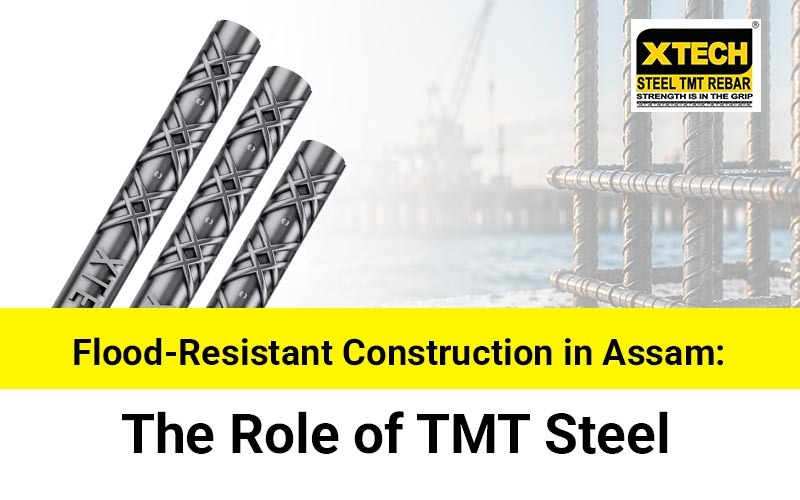
Our TMT bars are manufactured using German Thermex quenching technology and feature a precision-engineered Double X-Rib design intended to support bonding between steel and concrete.
Available in Fe 500 and Fe 500D grades, with diameters ranging from 6 mm to 32 mm, XTech TMT bars cater to a variety of construction requirements.
When choosing TMT steel for your project, it is important to consider applicable quality standards, mechanical properties, product specifications and the requirements of the structural design.
For construction in Assam, selecting appropriate reinforcement should go hand in hand with sound foundation design, effective drainage, good-quality concrete and careful workmanship.
By making informed material choices and following professional engineering guidance, builders can work towards creating structures designed for long-term performance in the region's challenging climatic conditions.
Building a More Resilient Future for Assam
As Assam continues to face seasonal flooding and heavy monsoon rainfall, resilient construction deserves greater attention from homeowners, builders and infrastructure planners.
The process begins with understanding local conditions and making informed decisions at every stage, from site selection and foundation design to reinforcement steel selection and ongoing maintenance.
Quality TMT bars contribute to the strength and stability of reinforced concrete structures, but lasting resilience depends on how every part of the building is designed, constructed and maintained.
At XTech TMT, we believe that stronger construction begins with quality materials, informed decisions and engineering that responds to the conditions in which buildings must stand.
XTech TMT - Engineered for Strength. Built for Trust.